

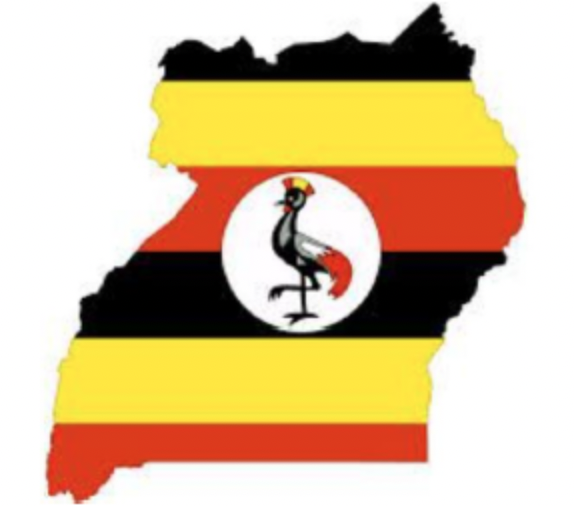
In 1972, at the age of Nine, I became a refugee. My family was among the thousands of Ugandans Asians forced to leave Uganda following President Idi Amin’s expulsion order.
While historians regard this event as one of the most significant forced migrations in modern African history, for me it was a deeply personal tragedy. It marked the loss of my home, my childhood, and the only country I had ever known.
I grew up in the town of Mbale in eastern Uganda, situated beneath the majestic slopes of Mount Elgon. To a young boy, Mbale felt like paradise. One of my clearest memories is the crystal-clear spring water that flowed from the mountain into our home. The mornings were cool and refreshing, often requiring a jumper before the warmth of the African sun transformed the day. Regular afternoon rains nourished the landscape, leaving the countryside vibrant and green.
I
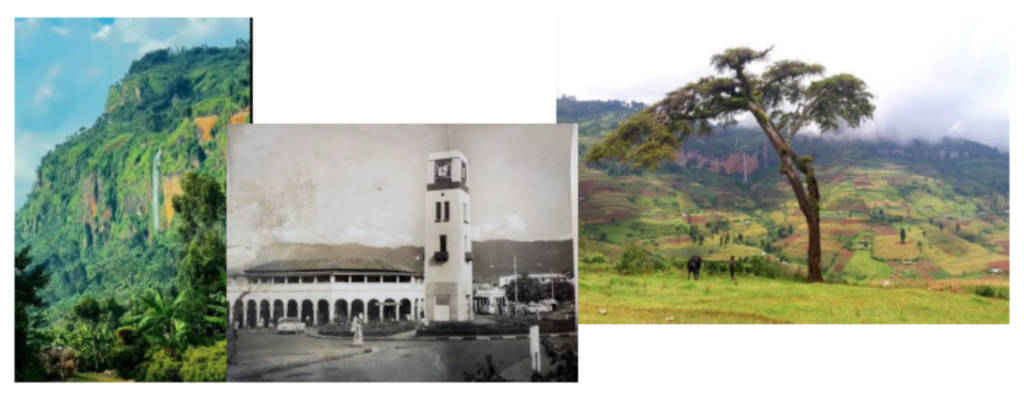
I attended North Road Primary School, where I enjoyed mathematics and spent happy days with my friends. Looking back, those years represent some of the happiest moments of my childhood.
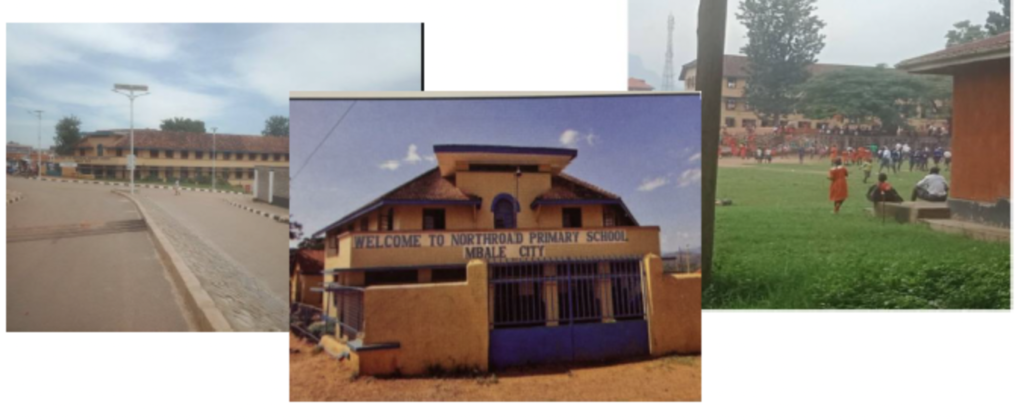
My family, like many others in Uganda’s Asian community, had deep roots in East Africa. Asians had contributed significantly to Uganda’s economic development, particularly in commerce, manufacturing, and trade. My father had built a successful business through years of hard work, and we considered ourselves Ugandan. Uganda was not simply where we lived; it was our home.
However, political instability increasingly threatened the country’s future. Following Uganda’s independence from Britain in 1962, tensions grew within the nation. In January 1971, General Idi Amin seized power in a military coup. Although I was too young to understand politics, I sensed the growing unease around me. Adults spoke quietly, rumours spread throughout the community, and fear gradually replaced the sense of security that many families had once enjoyed.
The situation changed dramatically on 4 August 1972 when Idi Amin announced that Asians who were not considered bona fide Ugandan citizens had ninety days to leave the country. Amin claimed that he had received a divine message instructing him to expel Uganda’s Asian population. Approximately 60,000 Asians suddenly faced the prospect of exile. Families who had lived in Uganda for generations were told that they no longer belonged.
I vividly remember my father’s reaction to the announcement. Everything he had spent years building—his business, property, investments, and future plans—was at risk of being lost. The uncertainty and fear that followed affected every aspect of our lives.
Even before the official expulsion order, my parents feared for the safety of their children. My sixteen-year-old sister was sent to Kenya to stay with relatives. As a Nine-year-old, I struggled to understand why she had to leave. I only knew that someone I loved was suddenly gone. The separation brought sadness and uncertainty to our family, and none of us knew when we would see one another again.
Several weeks later, the reality of our own departure became unavoidable. Although I had overheard discussions about visas and travel documents, I never truly believed that we would leave Uganda. Then one day I saw suitcases being packed. The atmosphere in our home was tense and emotional. It was then that I learned we were leaving Mbale—not for a holiday or a temporary visit, but forever.
There was little opportunity to say goodbye to friends, neighbours, or teachers. Our extended family travelled together in a convoy of twelve vehicles, hoping that there would be safety in numbers. As we drove away from Mbale, I watched familiar streets and landmarks disappear behind us. At the time, I did not realise that I would never see many of them again.
The journey quickly became a frightening ordeal. Less than ten kilometres outside Mbale, our convoy encountered the first military checkpoint. Armed soldiers ordered everyone from their vehicles and searched luggage for valuables such as cash, jewellery, and gold. During the search, a soldier took a small toy from my hands—a simple ball-maze puzzle. Although it held little monetary value, it meant a great deal to me. I burst into tears as my parents attempted to comfort me.
The situation soon became even more threatening. The commanding officer accused my father of hiding gold and warned that if any was discovered, he would shoot him and would drink his blood. Soldiers searched our belongings thoroughly but found nothing. Although we were eventually allowed to continue, the experience left a lasting impression on me. For the first time, I understood what it felt like to be powerless.
The road to Kampala was marked by numerous military checkpoints, each one bringing new anxiety. Families were subjected to humiliating searches, harsh questioning, and intimidation. At one checkpoint, I witnessed elderly people being forced to crawl on their knees along the hot road after being accused of lying to soldiers. Their suffering highlighted the fear and humiliation experienced by thousands of expelled families.
As we travelled through the beautiful Ugandan countryside, I looked out at the green hills and villages passing by. Although I did not fully understand the political reasons behind our expulsion, I understood one painful truth: I was leaving behind the only home I had ever known. The journey had become more than a trip between cities; it had become a journey into exile.
Upon arriving in Kampala, I witnessed an incident that revealed the risks my father was willing to take to protect our future. Away from the others, he and his driver removed an interior panel from our car door. Hidden inside was a cloth bag filled with gold jewellery. They had concealed it within the vehicle before beginning the journey, successfully avoiding detection at every checkpoint. Looking back, I realise how dangerous this decision was. Had the jewellery been discovered, the consequences could have been severe.
Kampala itself was filled with uncertainty and desperation. Thousands of families crowded embassies and government offices seeking permission to enter other countries. My father initially applied for entry to the United Kingdom, but political opposition fuelled by Mr Enoch powell to Ugandan Asian refugees created uncertainty, and our application was unsuccessful. Eventually, through his Indian heritage, my father secured permission for our family to relocate to India.
The Ugandan government imposed strict limits on what departing families could take with them. Homes, businesses, vehicles, bank accounts, and personal possessions
accumulated over decades were left behind. Despite suffering significant losses himself, my father helped other families purchase airline tickets when they could not afford them. It was an act of generosity that I would only fully appreciate years later.
Our final departure took place at Entebbe Airport. Before we left for the airport, my father distributed much of the family’s remaining jewellery between my middle sister and me, hiding it beneath our clothing. He believed that children would attract less attention from officials. He instructed us to cry loudly if anyone attempted to search us.
Ironically, what helped us avoid a thorough inspection had nothing to do with the jewellery. I was carrying a bag filled with hundreds of marbles, which I treasured. During inspection, officials asked me to open the bag. As I did so, marbles scattered across the airport floor in every direction. I immediately burst into tears. Airport staff rushed to help collect them, creating confusion and distraction. In the chaos, neither my sister nor I received the detailed search my father feared. The hidden jewellery remained undiscovered.
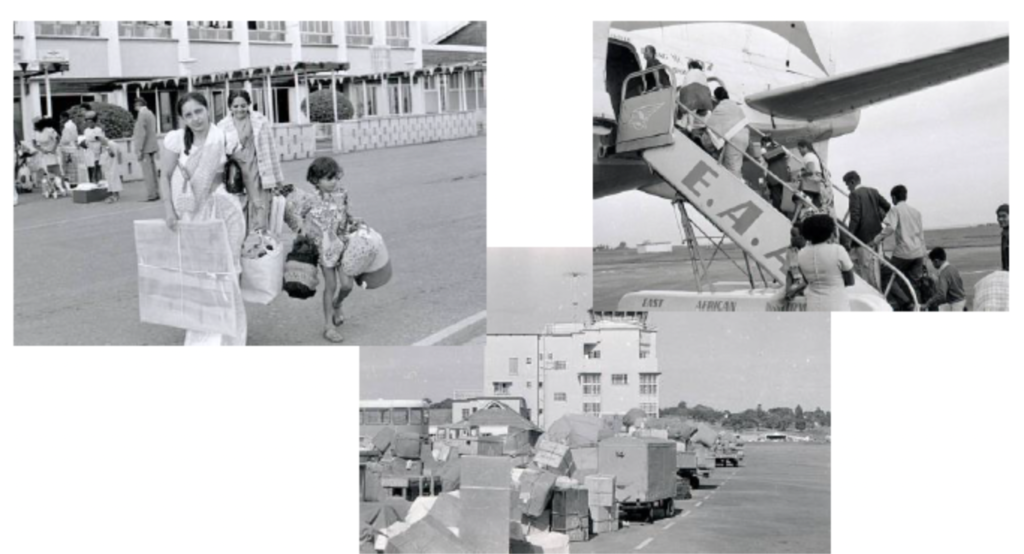
Shortly afterwards, we boarded our flight. For the first time in many months, we felt safe.
Life in India was not easy, but my family was determined to rebuild. Eventually, my elder sister re-joined us from Kenya, and my father established a successful ice cream business. Later, through my mother’s British passport, In August 1974 our family was able to settle in the United Kingdom. Like many Ugandan Asian families, we began again with very little and gradually rebuilt our lives through hard work and perseverance.
More than fifty years have passed since our departure from Uganda. Today, the expulsion of Uganda’s Asians is remembered as an important historical event, studied by scholars and historians around the world. Yet for me, it remains a personal story of loss, resilience, and identity.
I still remember the cool mornings beneath Mount Elgon, the crystal-clear water of Mbale, my school friends, and the afternoon rains. I even remember the small toy that was taken from me at the first checkpoint. These memories remind me of a childhood interrupted by forces beyond my control.
Although I was forced to leave Uganda, it remains an important part of who I am. Home is more than a place on a map; it is a collection of memories, experiences, and emotions that stay with us throughout our lives. Some places never leave your heart. For me, Uganda will always be one of them.
Report Written by
Rajesh (Raj) Desai ProvGMen


