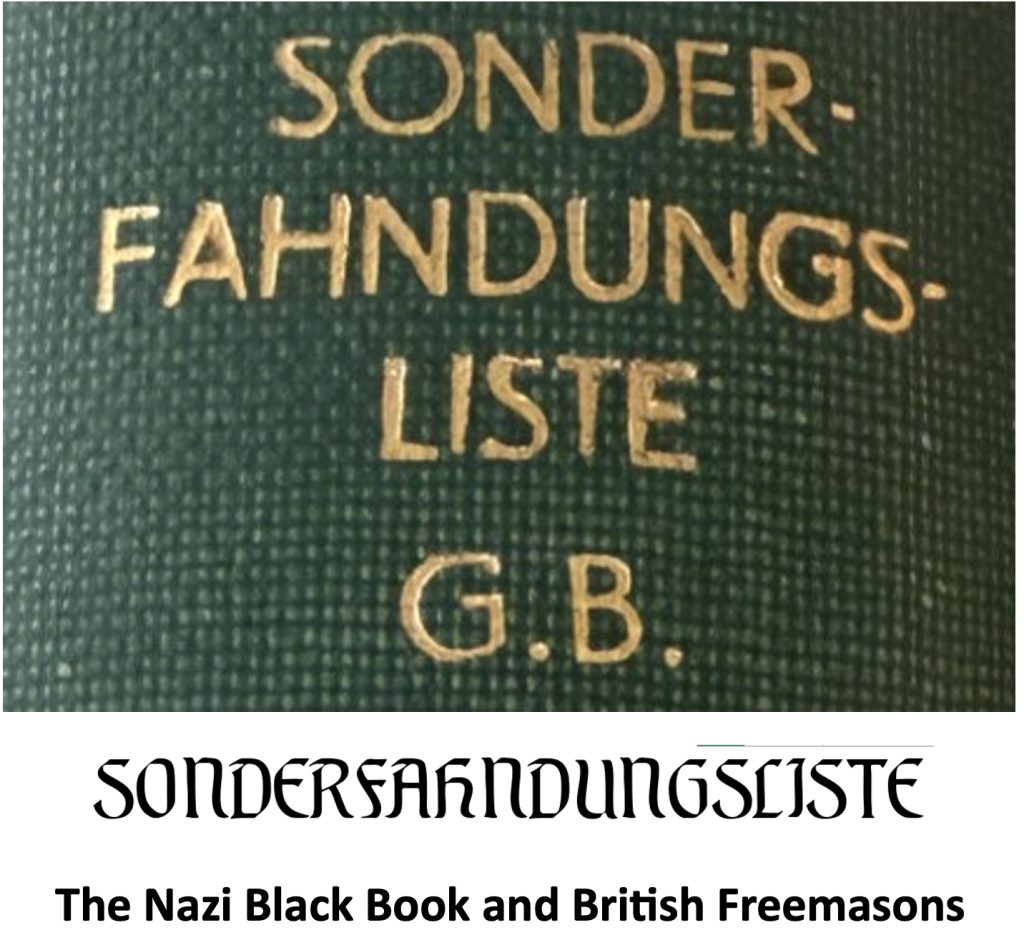
Bro Stan Marut PPrJGD SLGR, member of Temple of Athene Lodge No 9541, the Province’s Research Lodge, considers the Nazi Black Book and its significance for freemasonry in the United Kingdom if the Nazis had successfully invaded Britain in 1940. The Sonderfahndungsliste GB was essentially a list of persons of interest to the Reichssicherheitshauptamt (RSHA) (Reich Security Main Office), through which the Nazis dealt with their political and ideological enemies. Established in September 1939, it was a combination of the Security Service (SD) and the Security Police (SIPO), including the Gestapo and Criminal Police.
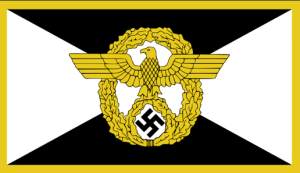
The flag for the Chief of the Intelligence and Security Police Service
I have already had published an article on Freemasons Oppressed:
https://middlesexfreemasons.org.uk/freemasons-oppressed/
Which outlined a list of dignitaries and others that would be of interest to the RSHA once Britain had been successfully invaded. However, within this Black Book there was a very sinister list of Lodges and Masonic Provinces with the names and addresses of Provincial Grand Secretaries that was compiled. It can only be imagined what the outcome of further investigations might have led to. This so called Black Book was discovered in the Gestapo’s Berlin HQ in September 1945. There may been many versions compiled over time but the one held in the Imperial War Museum Archive in London is the one which is referred to in this article.
TARGET MIDDLESEX
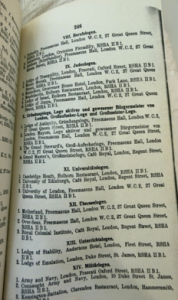
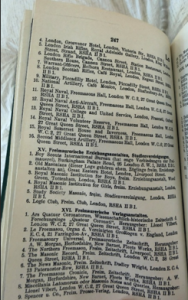
This list of masonic interest actually included the name and address of Norman Moore who was at that time the Provincial Grand Secretary of the Province of Middlesex. Shown below is an extract from the list.

The initials RSHA can clearly be seen. This list extended to all Provincial Secretaries in the English Constitution. Buckinghamshire freemason W. Bro Jim Weavill PPrGStB (Bucks) a member of Grenville Lodge No 1787 has been of great assistance in providing source material for this article and it was his recent visit to the Imperial War Museum (IWM) archive that provided pictures of the relevant book pages of interest to us a freemasons. Regrettably, it appears that no copies of this book are available locally in the UK as facsimile, but it was reproduced by the IWM in 1989. It was Brother Jim’s contention that if you had the details of the Provincial Secretary it was he who was most likely to have a register of freemasons in the Province and be forced to disclose this information. He also thought that this would also have been the case in other masonic jurisdictions where the Nazis held sway.
The list was systematic and identified various masonic categories some of which I show below:
JUDEN LOGEN – JEWISH LODGES
The Black Book list identified some Lodges as essentially Jewish:
Lodge of Tranquillity No 185 which is shown in the black book as meeting at the Frascati Restaurant in Oxford Street, London when it was published.
Mount Moriah Lodge No 34 – Freemasons Hall, London.
Montefiore Lodge No 1017 – Grosvenor House Hotel, London.
Mendelssohn Lodge No 2661 – Holborn Restaurant London – (Erased in 2008)
Lodge of Israel No 205 – Holborn Restaurant, London.
Lodge of Joppa No 188 – Freemasons Hall, London.
What is interesting to note in the Black Book is that many Lodges are shown as meeting in Hotels and in Restaurants as well as at Freemasons’ Hall.
The Black Book also identified other types of Lodges which included University Lodges, Oversees Lodges and also Military Lodges a number of which still exist today. Not only that but other Masonic Constitutions came under scrutiny and included the Grand Lodges of Scotland and Ireland.
LOGEN, DENEN MITGLIEDER DER KONIGLICHEN FAMILIE ANGEHOREN ODER ANGEHORTEN
(LODGES TO WHICH MEMBERS OF THE ROYAL FAMILY BELONG OR BELONGED).
Empire Lodge No 2108 – Freemasons’ Hall, London.
Household Brigade Lodge No 2614 – Splendide Hotel, London
Navy Lodge No 2612 – Freemasons’ Hall, London.
Prince of Wales Lodge No 259 Café Royal, London
Royal Alpha No 16 – Café Royal, London
PROVINZIAL – GROSSLOGEN
(PROVINCIAL GRAND LODGES)
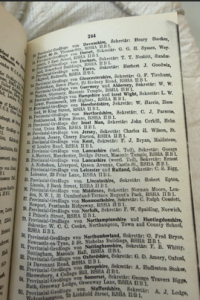
As shown above the Provincial Grand Secretaries were targets for the Nazis if they had successfully invaded. These Provincial Grand Lodges started at Bedfordshire and ended at Yorkshire West Riding. Given that the RSHA (Reichssicherheitsdienstampt) was founded in 1939 it is quite amazing how much of this information was put together so quickly if it was envisaged that there would be an invasion of England in 1940, especially as this would need to have been sourced perhaps from Masonic Year Books. Even so, it is frightening to consider that as the likes of Himmler and Heydrich were involved in this enterprise what would have been the consequence for freemasons had things been different.
The Black book did not just single out freemasons’ Lodges but also masonic publishing, the Boy Scouts, the Odd Fellows, the Rotary and Quatuor Coronati and perversely the Royal Masonic Institution for Boys and also that for Girls. It is hard to imagine what might be gained from any investigation of these organisations.
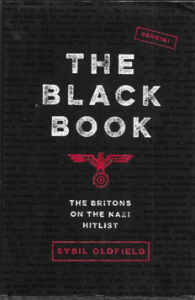
The Black Book shown here was written by Sybil Oldfield and gives an insight into all those individuals and organisations which were of interest to the Gestapo should the Nazis invade Great Britain. There is a section on Freemasonry and the motivations of the Reichssicherheitshauptampt (RSHA). She states in the book that Heydrich “counted the Masons as an implacable enemies of the German race”. He was one of the architects of the Final Solution and one of the most bestial and sinister Officials of the Third Reich. Fortunately for British Freemasons the Battle for Britain by the Third Reich was thwarted by the Royal Air Force.
There is some speculative history that Hitler did not wish to be at war with Great Britain, but it seems he may not have been aware that his Nazi Lieutenants had other plans. Although the invasion plan did not come to fruition, there must have been some fundamental research into the structure of freemasonry in the UK which preceded the formation of the RSHA in 1939.
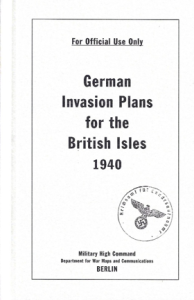
There was also an invasion plan which contained vast amounts of topographical information as well as a strategic and military assessment. Considering that in June 1940 the French government under Marshal Petain signed an armistice with Germany, Britain stood alone in Europe. The USA had not yet entered the war. As with the information on freemasonry the plans must have been prepared at an earlier moment.
Freemasonry lived to “tell the tale” and the Battle of Britain aerial warfare from July 1940 until October 1940 prevented the Nazis gaining air supremacy which was fundamental to a proposed land invasion. A Google search provided the following information – “Freemasons were involved in the Battle of Britain through their service in the RAF and other branches of the military, while other Freemasons provided support and charitable aid during the war. Some Freemasons have also honoured the battle by holding commemorative events at historic sites like the Battle of Britain Bunker at RAF Uxbridge.”
OTHER SAMPLE PAGES OF MASONIC INTEREST